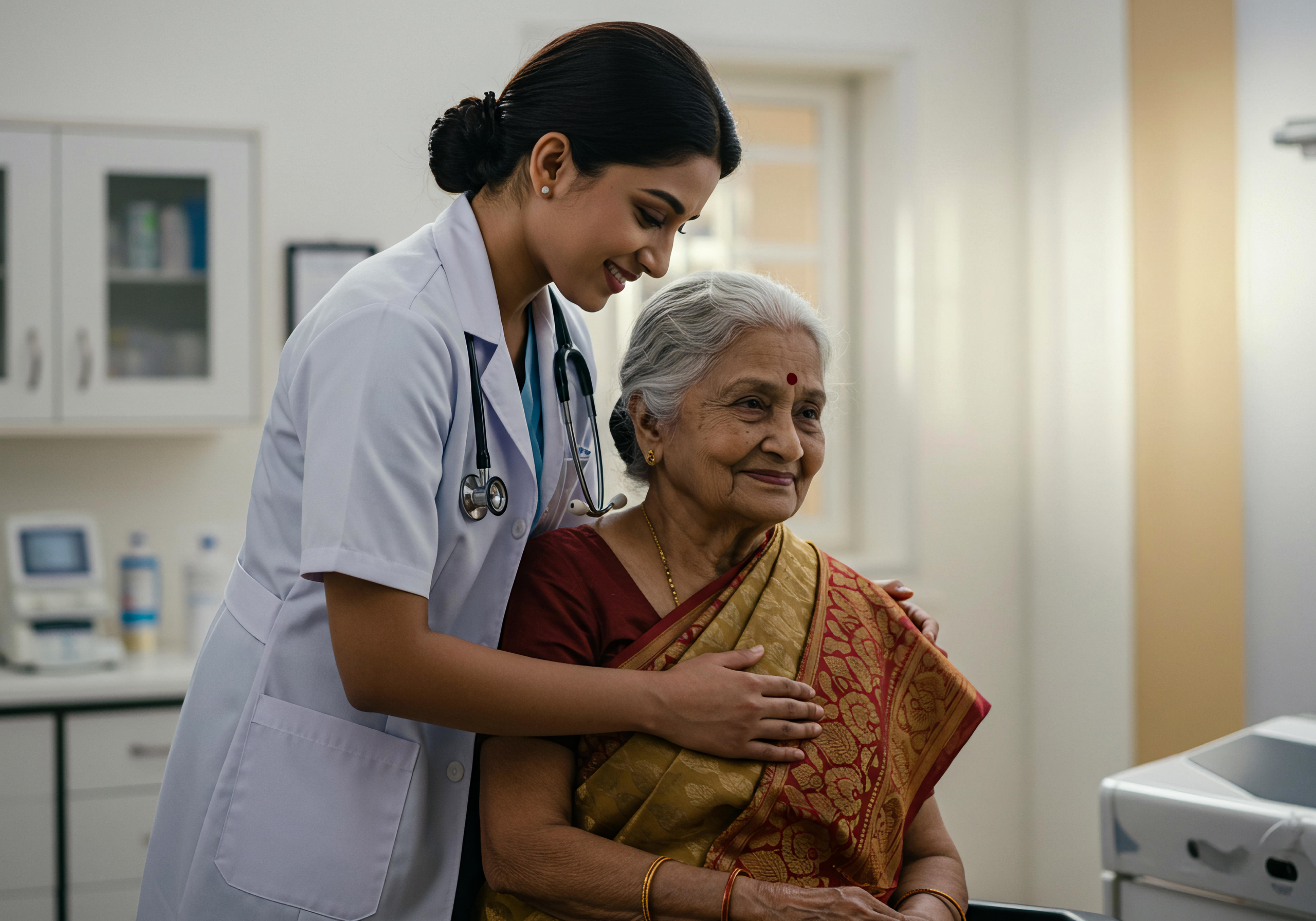
B.Sc in Nursing is a foundational undergraduate degree program designed to train students in nursing science, patient care, healthcare management, and clinical skills essential for the nursing profession. The program prepares graduates to work as registered nurses in hospitals, community health centers, and other healthcare institutions with competencies in patient care and health promotion. This webpage explains what the course covers, who should consider it, how admissions work, what students learn, and the career opportunities and salary expectations after graduation.
Eligibility and admission
Eligibility by stream
Science Stream: Yes
Arts Stream: No
Minimum eligibility criteria
Candidates must have passed 10+2 exams with Physics, Chemistry, and Biology (PCB) securing a minimum of 50 percent aggregate marks.
Admission may be through merit or entrance exams such as NEET, AIIMS, or state level nursing tests depending on the college or university.
Arts stream students are generally not eligible.
Why choose B.Sc in Nursing
Nursing is a respected and high-impact profession. Students who pursue B.Sc in Nursing learn to provide compassionate, evidence based care and to work as part of multidisciplinary healthcare teams. The course blends scientific knowledge with practical clinical training and community health exposure. It suits students who are interested in patient care, health education, public health initiatives, clinical procedures, and medical ethics.
Clear career pathways into hospitals, clinics, community health, and education
Strong practical component through clinical postings and internships
Transferable skills including communication, critical thinking, and research
Opportunities for further study such as M.Sc Nursing, specialty certificates, and public health degrees
Growing demand for skilled nurses in India and abroad
The curriculum ensures a balance between theory and practice. It provides a comprehensive foundation in basic sciences and specialized nursing subjects while emphasizing hands on clinical training, internships, and community outreach.
Core areas covered
Anatomy and Physiology
Biochemistry
Pharmacology
Microbiology
Nutrition
Psychology
Nursing Fundamentals
Medical surgical Nursing
Community Health Nursing
Mental Health Nursing
Midwifery and Obstetrical Nursing
Pediatric Nursing
Nursing Research
Practical training components
Clinical practice in wards and outpatient settings
Hospital internships and experiential learning
Community health programs and health camps
Nursing case studies and documentation exercises
Key subjects (course highlights)
Students will study the following subjects, which form the backbone of the B.Sc in Nursing degree:
Anatomy
Physiology
Biochemistry
Nutrition
Microbiology
Psychology
Pharmacology
Nursing Foundations
Medical surgical Nursing
Community Health Nursing
Mental Health Nursing
Pediatric Nursing
Midwifery and Obstetrical Nursing
Nursing Research
Practical skills developed
The program focuses on the skills required for safe, effective nursing practice. Graduates should be able to:
Conduct patient assessment and provide holistic patient care
Perform clinical procedures and nursing techniques safely
Educate patients and communities on health promotion and disease prevention
Administer medications according to protocols
Apply critical thinking and clinical decision making in emergencies and routine care
Communicate effectively with patients, families, and medical teams
Engage in community and public health nursing activities
Understand basic research methodology and apply evidence based practices
Tools and technology exposure
Students will gain familiarity with common clinical and administrative tools used in modern healthcare:
Medical monitoring equipment such as ECG, pulse oximeters, blood pressure monitors
Nursing care kits for wound care, IV therapy, and bedside procedures
Diagnostic tools for basic laboratory sample collection and monitoring
Patient management software for documentation, medication charts, and electronic records
Industry projects and hands on learning
To consolidate learning and build a professional portfolio, students typically engage in:
Clinical nursing practice in hospital wards and outpatient units
Community healthcare surveys and health education drives
Health promotion campaigns targeting schools and local communities
Development of patient care protocols and standard operating procedures
Nursing case studies with documentation and reflective learning
Structured hospital internships and experiential learning placements
Course duration and structure
B.Sc in Nursing is usually a four-year undergraduate degree comprising classroom theory, laboratory sessions, and clinical rotations. The semesters include practical assessments, clinical exams, and a final year project or dissertation in nursing research or community health.
Admission process overview
Check specific college eligibility and application deadlines
Apply through the college portal or centralized state counselling if applicable
Appear for required entrance exams where applicable
Provide valid academic records, identity documents, and medical fitness certificates during counselling
SALARY RANGE
per annum